

Time: Oct 25 2026 Views: 21
Secure your trailers with a state-of-the-art trailer security camera system. Learn how smart cameras enhance protection for construction sites, RVs, and more.
Smart cameras are changing how people protect trailers, equipment, vehicles, and temporary job sites. Instead of relying only on locks, fences, or periodic patrols, a modern trailer security camera can help you see what is happening in real time, record useful evidence, and respond faster when something looks wrong. Whether you manage construction assets, store tools in a cargo trailer, travel in an RV, or need temporary surveillance for a remote location, smart camera technology makes security more flexible and practical.
Trailer security needs smarter visibility because trailers are often mobile, exposed, and left unattended for long periods. A trailer can sit overnight at a job site, in a storage yard, outside a home, or at a campground, where traditional building security does not always reach. Smart cameras add active awareness: motion alerts, video recording, remote viewing, and, in some systems, deterrent features such as lights or speakers.
The challenge is not only theft. Vandalism, unauthorized access, fuel loss, equipment tampering, and liability issues can all create problems. A lock may slow someone down, but it cannot show who approached the trailer, when the incident happened, or what happened before and after. Cameras help fill that gap by turning a trailer from a blind spot into a monitored asset.
This is especially valuable for teams that move between sites. A portable security camera or mobile camera security setup can be deployed where the risk is today, not just where wiring already exists. That flexibility is one of the main reasons smart cameras have become so useful for trailers and temporary locations.
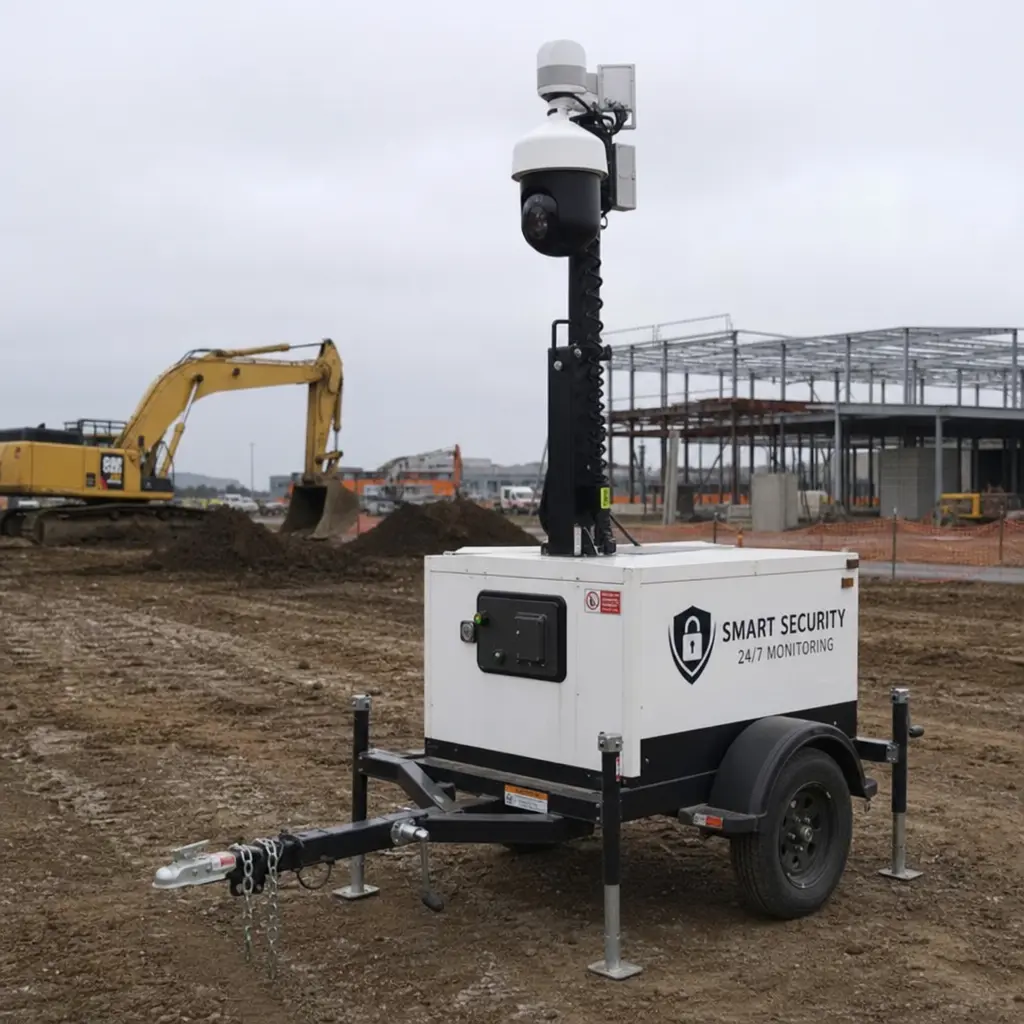
A strong trailer security system is not just one camera pointed at a door. It is a practical combination of camera placement, connectivity, power, recording, and alerts. The right setup depends on where the trailer is used, how often it moves, and what you need to protect.
Most systems include a few essential parts:
A wireless trailer camera is especially useful when running cable is difficult or when the trailer changes location often. However, “wireless” can refer to data transmission, not always power, so it is important to understand whether the camera still needs a wired power source.
Security cameras are often discussed as evidence tools, but their first job is frequently deterrence. Visible cameras, warning decals, lights, and monitored equipment can make a trailer look like a harder target. Many opportunistic thieves prefer speed and low risk, so anything that increases uncertainty can help discourage interference.
Smart features make deterrence more active. Some systems can trigger floodlights when motion is detected. Others can send instant alerts, allowing a manager to check live video before deciding whether to call security or law enforcement. Two-way audio, when available, can also let someone speak through the camera and make it clear the area is being watched.
This does not mean cameras replace good physical security. Hitch locks, wheel locks, reinforced doors, secure parking, asset marking, and inventory control still matter. Cameras work best as part of a layered approach, where each measure makes the trailer less attractive and easier to monitor.
Not every security need calls for the same equipment. A small enclosed trailer parked at home may only need a compact camera watching the door and driveway. A remote job site with machinery, materials, and multiple access points may need a larger mobile security camera trailer with elevated camera mounts and independent power.
Here is a practical way to compare the options:
| Security option | Best fit | Main advantage | Important consideration |
| Fixed camera near parking area | Trailer parked in one regular location | Simple monitoring from a home or business | Limited usefulness if the trailer moves |
| Portable security camera | Temporary parking, events, small sites | Easy to move and reposition | Needs dependable power and connectivity |
| Trailer-mounted camera system | Cargo, utility, or equipment trailers | Stays with the trailer | Must withstand vibration, weather, and movement |
| CCTV mobile trailer | Larger sites and temporary surveillance zones | Elevated view and broad coverage | Requires planning for placement and visibility |
| Solar security camera trailer | Remote areas without easy power | Self-sustaining power support | Solar exposure and battery capacity matter |
The best choice is the one that fits the real pattern of use. If the trailer moves daily, portability and rugged mounting matter. If it sits on a construction site for weeks, wide-area coverage and reliable alerts may be more important.
Solar-powered trailer surveillance is useful because it supports monitoring in places where power is unavailable, unreliable, or too costly to install temporarily. A solar security camera trailer can keep cameras, communication equipment, and related devices running with less dependence on generators or fixed electrical service. For remote lots, construction zones, farms, events, and storage yards, that independence can be a major advantage.
Solar does not remove the need for planning. The system still needs enough sunlight, battery capacity, and efficient equipment to handle overnight operation and cloudy periods. Camera count, recording settings, cellular use, lighting, and climate can all affect power demand.
When comparing options, look for clear information about panel size, battery storage, expected runtime, and weather resistance. A reliable solar surveillance trailer manufacturer should be able to explain how the system is sized for different environments and use cases without making vague promises. The goal is not just to have a solar panel on the unit; it is to have a balanced power system that supports dependable surveillance.
Construction sites are one of the clearest examples of why mobile surveillance matters. Tools, fuel, copper, machinery, and building materials can be spread across open areas, and the site layout may change as work progresses. Mobile surveillance trailers for construction sites help managers adapt coverage as entrances shift, materials move, or new risk areas appear.
A camera trailer can be positioned near a gate, equipment staging area, office trailer, or material storage zone. Elevated cameras can provide a broader view than a camera mounted at eye level, which helps when monitoring larger spaces. If the system includes remote access, supervisors can check site conditions after hours without driving across town.
For construction teams, smart cameras can also support operational awareness. Video may help confirm deliveries, document site activity, or review access patterns. While security is the main goal, better visibility can improve daily management as well.
A simple construction-site checklist includes:
A camera with a long feature list is not always the best camera for trailer protection. The most useful features are the ones that help you notice meaningful activity, verify what is happening, and preserve footage clearly.
Prioritize these capabilities when evaluating a trailer security camera:
Connectivity deserves special attention. Wi-Fi may be enough in a driveway or business lot, but cellular service is often more practical for rural sites, temporary projects, or mobile deployments. If the system uses cellular data, consider how often video will be streamed and how alerts or uploads may affect the plan.
Smart camera systems are not only for commercial trailers. An rv security camera can help travelers monitor the area around their RV, check on stored gear, or keep an eye on the vehicle when parked at a campground, storage facility, or home. For many RV owners, the value is peace of mind as much as evidence.
RV and travel trailer users often need a balance between visibility and simplicity. A system should be easy to arm, easy to check from a phone, and reliable enough to use in changing locations. Battery life, mounting style, and connectivity become important because the environment changes from one trip to the next.
Privacy also matters. Cameras should be aimed at your own vehicle, campsite, or storage area rather than into neighboring spaces. Responsible placement helps protect your property without creating unnecessary conflict with others nearby.
Even a good camera can underperform if the setup is rushed. One common mistake is mounting the camera too high or too far away to capture useful detail. A broad overview is helpful, but you may also need a clear view of doors, locks, faces, or vehicle plates.
Another mistake is ignoring power and connectivity until after installation. A camera that drops offline or runs out of battery during the most important hours cannot do its job. Test the system in the actual location, at night, and under normal operating conditions before relying on it.
Avoid these issues when possible:
Good security comes from practical details. The easier the system is to maintain, the more likely it is to be used correctly.
Trailer security works best when visibility, deterrence, and response are built into one plan. A mobile security camera trailer, wireless camera setup, or solar-powered surveillance unit can all strengthen protection when matched to the right environment. The key is to start with the risk: where the trailer sits, what is stored inside, how often it moves, and who needs to receive alerts.
Smart cameras do not eliminate every risk, but they give owners and managers better information at the moments that matter. For construction sites, RVs, storage yards, and temporary operations, that can mean faster decisions, clearer evidence, and more confidence when assets are out of sight. If your trailer is important enough to lock, it is worth considering how smart camera coverage can help you watch it, too.

Behind Every Critical Project.
@ 2026-2026 Rigtor Industry. All Rights Reserved.
 EN
 ES
 PT
 AR