

Time: Oct 24 2026 Views: 21
Discover the advantages of a 50 hp air compressor for industrial use, ensuring consistent air delivery for better productivity. Ideal for facilities needing reliable, continuous air.
A 50 hp air compressor is built for operations that need dependable air power across multiple tools, workstations, or production processes. It sits in the range where compressed air is no longer an occasional utility but a core part of daily output. For shops, plants, and service facilities comparing compressor options, understanding the benefits of this size can make it easier to choose a system that supports productivity without oversizing blindly.
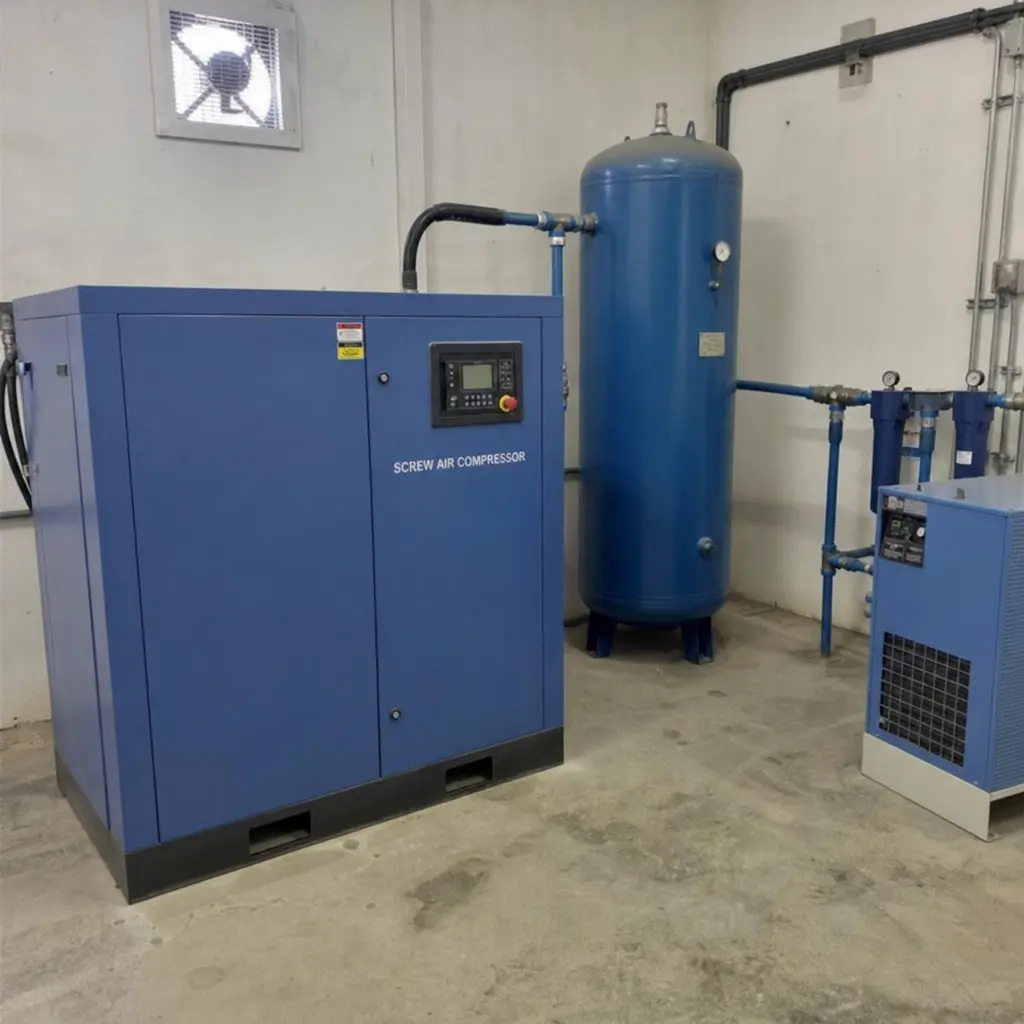
A 50 hp air compressor is often the right fit when a facility has steady air demand, several operators using pneumatic equipment, or equipment that cannot tolerate frequent pressure drops. It is larger than a small shop compressor, but still practical for many medium-duty and industrial environments where reliability matters every shift. The key is not horsepower alone; the best match depends on air demand, pressure requirements, duty cycle, available space, electrical service, and future growth.
This size is commonly considered for manufacturing, fabrication, automotive service, packaging, woodworking, plastics, and other facilities where compressed air supports repeatable work. If air tools slow down, machines fault, or production teams wait for pressure to recover, a stronger system may improve workflow. A properly selected air compressor 50 hp unit can help stabilize air supply and reduce the stop-start frustrations that come from undersized equipment.
One of the main benefits of a 50 hp compressor is its ability to serve continuous or high-demand applications. Smaller compressors may work well for intermittent use, but industrial settings often need air available throughout the day. When demand rises and the compressor cannot keep up, tools lose performance, cylinders move inconsistently, and production quality can suffer.
A well-sized industrial air compressor helps teams work at a steadier pace. Operators do not have to pause as often for pressure recovery, and equipment that depends on clean, stable air can run more predictably. This is especially valuable when compressed air is tied to several parts of the process, such as blow-off, clamping, sanding, spraying, conveying, or automated controls.
The benefit is not just more power. It is smoother work. When a compressor system provides enough air for normal peaks, the whole facility can feel less reactive and more controlled.
Many facilities shopping in this size range consider a 50 hp rotary screw air compressor because rotary screw designs are suited to continuous-duty operation. Instead of relying on a piston-style compression cycle, rotary screw compressors use intermeshing rotors to produce a steady flow of compressed air. That design can be a strong advantage in applications where air demand is frequent or nearly constant.
A rotary screw unit is often chosen for its balance of durability, smoother operation, and suitability for industrial workloads. While the exact performance depends on the model and maintenance program, the design is generally associated with reliable air delivery and fewer interruptions than equipment intended for lighter use.
For teams replacing an older system, a rotary screw compressor can also make the compressor room easier to manage. Many modern units include controls, monitoring features, and service access designed around daily industrial use. Those details matter when maintenance staff need to keep equipment running without unnecessary complexity.
A compressor that is too small often works hard for too long. It may cycle frequently, run hot, or struggle to recover during peak demand. Over time, that stress can contribute to more maintenance concerns and inconsistent performance.
A properly applied 50 hp system gives the operation more capacity to meet normal demand without constantly pushing the machine to its limit. This does not mean bigger is always better, because oversizing can create its own inefficiencies. However, when the demand genuinely supports this size, the compressor can operate in a more suitable range.
That matters for the entire air system, not just the compressor. Stable supply can reduce strain on downstream components such as dryers, filters, piping, regulators, and tools. The result is often a more manageable compressed air setup with fewer weak points exposed during busy periods.
A heavy duty compressor becomes valuable when one air source has to serve more than one job at a time. In many facilities, compressed air is shared across departments, machines, and workstations. One team may need air for fastening while another uses it for cleaning, sanding, or machine operation.
A 50 hp unit can provide the foundation for a broader compressed air network when it is paired with the right storage, piping, treatment, and controls. That makes it useful for facilities that want to consolidate air supply rather than relying on scattered smaller compressors. Centralizing the system can simplify maintenance and make it easier to manage air quality across the operation.
Common use cases include:
The practical advantage is flexibility. A correctly designed system can support today’s workload while leaving room for reasonable expansion.
A 50 hp variable speed drive rotary screw air compressor adjusts motor speed to better match changing air demand. Instead of running in a fixed pattern regardless of how much air the facility needs, a variable speed drive system can ramp output up or down within its operating range. This can be useful in plants and shops where demand changes throughout the day.
Variable speed drive technology is not automatically the best choice for every application. If air demand is nearly constant, a fixed-speed rotary screw compressor may still be appropriate. But where usage rises and falls, a VSD model may reduce wasted operation and help the system respond more smoothly to real demand.
When evaluating this option, it helps to look at your air profile. Do crews use the most air only during certain shifts? Do machines start and stop throughout the day? Are there long periods when demand is lower than peak capacity? If the answer is yes, variable speed drive performance may be worth discussing with a compressed air professional.
Horsepower is easy to compare, but it is not the only factor that determines whether a compressor will work well. A facility should understand how much air it uses, at what pressure, and how that demand changes during a normal day. Guessing can lead to a system that is either undersized and frustrating or oversized and inefficient.
Before choosing a 50 hp air compressor, review these planning points:
Reading air compressor reviews can be helpful when comparing brands, controls, noise levels, service experiences, and long-term ownership impressions. Reviews may reveal patterns that do not always appear on a specification sheet. They can also help buyers understand how a compressor performs in real work environments.
Still, reviews should not replace system sizing. A compressor that performs well in one facility may be a poor fit in another if the demand profile is different. Look for reviews from businesses with similar applications, duty cycles, and service expectations. Pay attention to comments about reliability, parts availability, control interface, maintenance access, and support.
It is also wise to compare more than purchase price. The lowest upfront cost may not deliver the best long-term value if the unit is inefficient for your demand pattern or difficult to maintain. For industrial equipment, the right choice is usually the compressor that fits the application, service plan, and operating environment together.
Not every shop needs a 50 hp system, but certain symptoms suggest it may be time to evaluate one. These signs often point to air demand outgrowing the current setup or to a compressor system that was never designed for the present workload.
Consider reviewing your system if you notice:
These symptoms do not automatically mean a 50 hp rotary screw air compressor is the answer, but they do justify a closer look. A system assessment can show whether the solution is a larger compressor, better storage, piping improvements, leak repair, controls, or a combination of upgrades.
Once the need for a 50 hp compressor is clear, the next step is narrowing the configuration. A buyer may compare fixed-speed versus variable speed drive, tank-mounted versus base-mounted, integrated dryer options, enclosure design, voltage requirements, and control capabilities. Each choice affects installation, maintenance, and daily operation.
A good selection process should include the people who use and maintain the system. Operators understand when demand spikes. Maintenance teams know service pain points. Managers understand growth plans and production risk. Bringing those perspectives together helps prevent buying based on a single specification.
For many facilities, the best compressor is not simply the most powerful model available. It is the model that delivers dependable air, fits the utility room, supports required air quality, can be serviced efficiently, and leaves the operation room to grow.
A 50 hp air compressor can be a smart investment for facilities that need reliable, continuous air for demanding work. Whether you are considering a fixed-speed unit, a 50 hp variable speed drive rotary screw air compressor, or another industrial configuration, the biggest benefits come from matching the equipment to real demand.
Focus on the full air system: compressor capacity, pressure, storage, piping, air treatment, controls, and service support. When those pieces work together, an industrial air compressor becomes more than a utility machine. It becomes a dependable part of production, helping teams work with fewer interruptions and greater confidence.

Behind Every Critical Project.
@ 2026-2026 Rigtor Industry. All Rights Reserved.
 EN
 ES
 PT
 AR