

Time: Oct 24 2026 Views: 22
A 20 CFM compressor is built for users who need stronger, steadier airflow than small shop compressors can usually provide. Whether you are running pneumatic tools, supporting light production work, or improving air availability in a busy garage, understanding CFM helps you choose equipment that can keep up without constant pressure drops or long recovery times.
For many buyers, the appeal of a 20 cfm air compressor is balance. It offers more working capacity than many entry-level units while still fitting into workshops, mobile service setups, and small commercial environments where a full industrial air system may not be necessary.
A 20 CFM compressor delivers about 20 cubic feet of air per minute, usually measured at a stated pressure such as 90 PSI. That airflow rating matters because air tools do not only need pressure; they also need enough air volume to keep operating consistently. A 20 cubic feet per minute air compressor can support more demanding tools, longer run cycles, and multiple moderate air demands better than a smaller unit.
Think of pressure as the force of the air and CFM as the amount of air being supplied. A tool may say it needs 90 PSI, but if the compressor cannot provide enough CFM at that pressure, performance will fade. The tool may slow down, the compressor may run constantly, and the work can become frustratingly uneven.
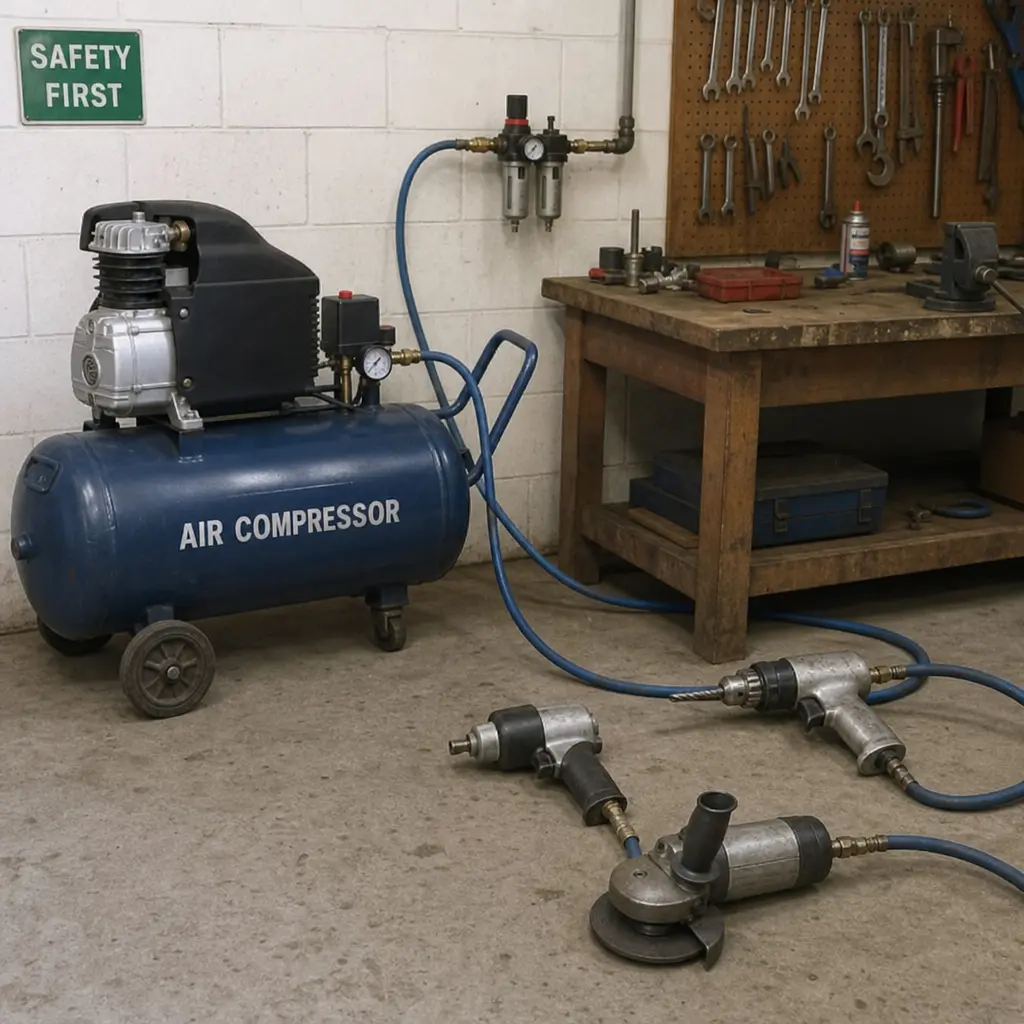
Many buyers focus first on tank size, horsepower, or voltage, but CFM is often the more practical starting point. The tank stores compressed air, but the pump’s CFM output determines how quickly that air is replaced. If the compressor cannot recover fast enough, the tank becomes a temporary buffer instead of a reliable air source.
A 20 cfm compressor is useful because it gives you room to work with tools that consume air continuously or in frequent bursts. This can include sanders, grinders, spray equipment, impact tools, blow guns, and other air-powered equipment. Exact requirements vary by tool, so the safest approach is to check the tool’s CFM demand at the pressure you plan to use.
A helpful rule is to choose a compressor with more CFM than your highest-demand tool requires. That margin reduces strain on the equipment and helps account for air loss, hose length, fittings, and real-world working conditions.
The main benefit of a 20 cfm air compressor is consistency. Instead of waiting for the tank to recover every few minutes, users can work with fewer interruptions. That makes a noticeable difference when the job depends on rhythm, surface finish, or repeated tool use.
Key advantages include:
This does not mean bigger is always better. It means the compressor should be sized to the work. For occasional tire inflation or brad nailing, a 20 CFM unit may be more than necessary. For regular shop tasks, fabrication support, paint prep, or tool-heavy projects, the extra airflow can be the difference between “good enough” and genuinely efficient.
A 20 CFM compressor often fits the middle ground between home-garage convenience and industrial capacity. It is commonly considered by serious DIY users, automotive hobbyists, small repair shops, maintenance teams, and tradespeople who rely on pneumatic tools.
In a garage or workshop, it can support tasks such as removing fasteners, cleaning parts, running die grinders, and powering certain spray applications. In a small business setting, it may help keep one workstation productive without the complexity of a large centralized air system.
The best fit depends on duty cycle, pressure rating, electrical service, portability, and noise tolerance. A portable unit may be easier to move but may not offer the same durability or air storage as a larger stationary compressor. A stationary model may require more planning but can deliver a more stable setup for frequent use.
A 20 CFM compressor generally gives you more operating headroom than a 10 CFM or 15 CFM unit, especially for tools that run for longer periods. The best 10 cfm air compressor may be ideal for lighter shop tasks, while a 15 cfm compressor can be a strong middle option for users whose air needs are moderate. A 20 CFM model becomes more attractive when tool demand rises or when you want fewer pauses during sustained work.
Here is a simple way to compare them:
| Compressor range | Best suited for | Practical limitation |
| Around 10 CFM | Light workshop use, inflation, nailers, occasional impact tools | May struggle with continuous air tools |
| Around 15 CFM | More regular garage work, moderate pneumatic tools, small shop tasks | Still may pause during high-demand use |
| Around 20 CFM | Frequent tool use, stronger recovery, demanding single-tool applications | May need more space, power, and budget |
A 10 CFM unit can still be the right choice if your tools are light and your work is occasional. A 15 CFM compressor can be a smart step up when you want more flexibility without moving into a larger system. But if you regularly use tools that drain air quickly, the 20 CFM category gives you a stronger cushion.
One common search is for the highest cfm 120v air compressor. It makes sense: many shops and garages already have standard 120V outlets, and upgrading electrical service can add complexity. However, higher airflow usually requires more power, so buyers should be careful about assuming a standard outlet can support every high-CFM compressor.
If you are comparing 120V options, look closely at the manufacturer’s CFM rating at working pressure, not just marketing language. Also check amperage requirements, plug type, breaker compatibility, startup load, and whether the unit is designed for continuous or intermittent use. A compressor that technically plugs in may still be a poor fit if it trips breakers or cannot sustain the tool you plan to run.
For many 20 CFM models, buyers may need to consider 240V power, larger motors, or stationary installation. That is not a drawback if the workload justifies it. It simply means the air system should be planned like a real piece of shop infrastructure rather than treated as a casual accessory.
When looking at a 20 cfm air compressor for sale, it is easy to compare price first. Price matters, but it should not be the only deciding factor. A lower-cost unit that cannot meet your air demand may cost more in wasted time and frustration.
Use this checklist before buying:
A compressor should be chosen as part of a complete air system. Hoses, couplers, regulators, filters, and moisture control all affect performance. Even a capable 20 CFM machine can feel underwhelming if the rest of the setup restricts airflow.
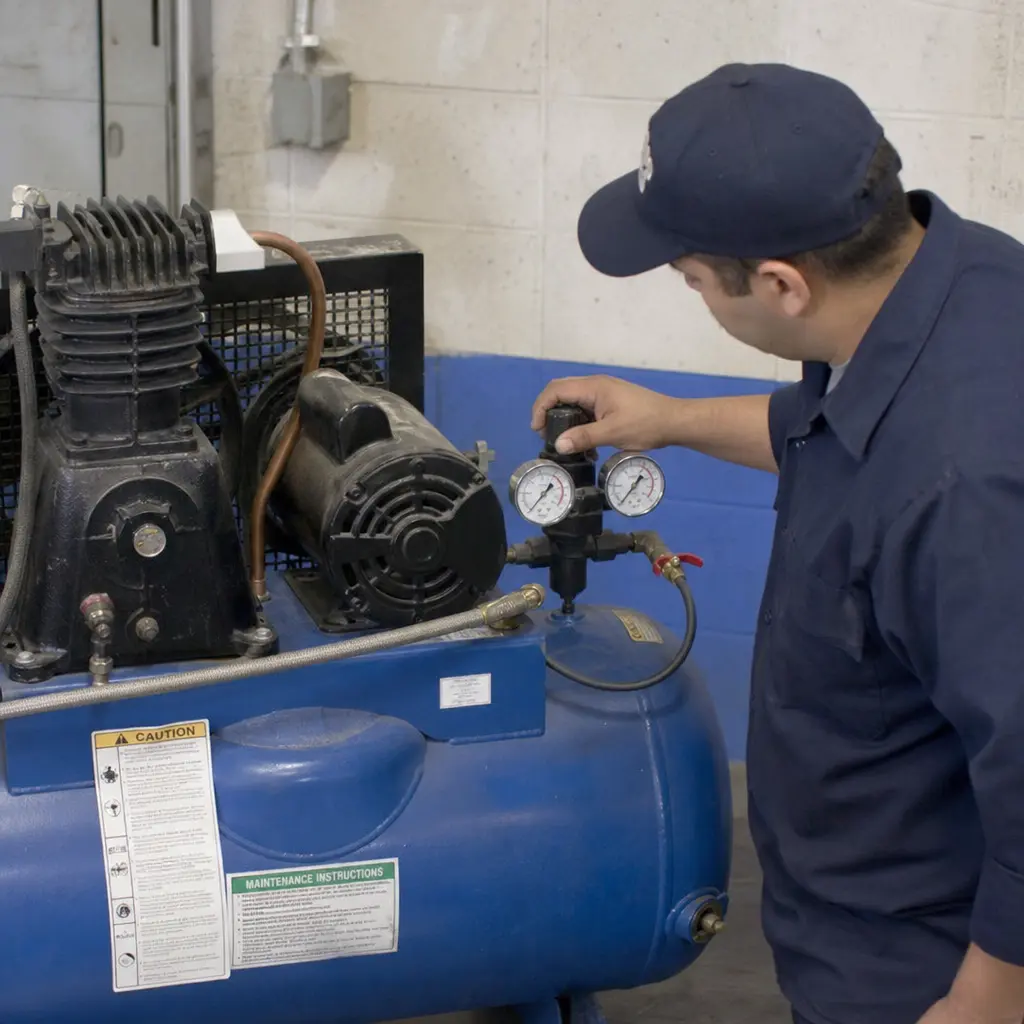
The simplest buying method is to start with your tools, not the compressor. List every air tool you expect to use, then identify the tool with the highest CFM requirement at your working pressure. If you may use more than one tool at the same time, add those CFM requirements together.
Next, add a reasonable safety margin. Real-world systems lose efficiency through hose length, fittings, leaks, filters, and heavy use. Choosing a compressor that barely meets the listed requirement can lead to short cycling and inconsistent results.
For example, a user who only runs nailers and inflation tools may not need a 20 CFM unit. Someone using grinders, sanders, or spray equipment regularly may quickly appreciate the extra capacity. The right answer depends less on the label and more on the actual airflow demand of the work.
Many compressor problems begin before the machine is ever turned on. A buyer sees a large tank, a bold horsepower number, or a familiar voltage and assumes the unit will handle the job. In practice, the performance comes down to whether the compressor can supply enough usable air at the required pressure.
Avoid these common mistakes:
Planning ahead helps you avoid buying twice. If your current needs are light, a smaller model may be perfectly sensible. If your work is becoming more serious, a 20 CFM setup may give you the breathing room your shop needs.
A 20 CFM compressor is a strong choice for users who need dependable airflow for more demanding pneumatic work. It offers more capacity than many 10 CFM and 15 CFM options, helps reduce downtime, and gives tools a better chance to perform as intended.
Before choosing a model, match the compressor to your tools, pressure requirements, electrical setup, and daily workload. When sized correctly, a 20 cfm air compressor becomes more than another piece of equipment; it becomes the steady air source that keeps the work moving.

Behind Every Critical Project.
@ 2026-2026 Rigtor Industry. All Rights Reserved.
 EN
 ES
 PT
 AR