

Time: Oct 24 2026 Views: 19
A rotary screw air compressor is built for steady, reliable compressed air in environments where downtime, pressure drops, and inconsistent output can slow everything down. Unlike many intermittent-duty machines, this style of compressor is designed to run smoothly for long periods, making it a practical choice for workshops, plants, maintenance teams, and production facilities that need dependable air on demand.
For many businesses, the real value is not just that the equipment compresses air. It is that a screw type air compressor can support tools, processes, and systems with less fluctuation, less noise, and less day-to-day attention than some other compressor designs.
A rotary screw air compressor is often chosen because it delivers continuous airflow with strong efficiency, stable pressure, and a long service life when properly maintained. It works especially well in settings where compressed air is used throughout the workday rather than only for short, occasional tasks.
The basic design uses two interlocking rotors to compress air as it moves through the compressor chamber. This smooth rotary motion is one reason compressors rotary screw systems are known for consistent output. Instead of relying on a piston moving back and forth, a rotary air compressor produces compressed air with fewer pulses, which helps support more predictable performance.
That steady output matters in real work environments. Air tools can lose power when pressure fluctuates. Pneumatic controls may behave inconsistently if air supply is unstable. Production equipment can experience interruptions when the compressor cannot keep up. A well-sized screw compressor helps reduce those problems by matching compressed air supply to ongoing demand.
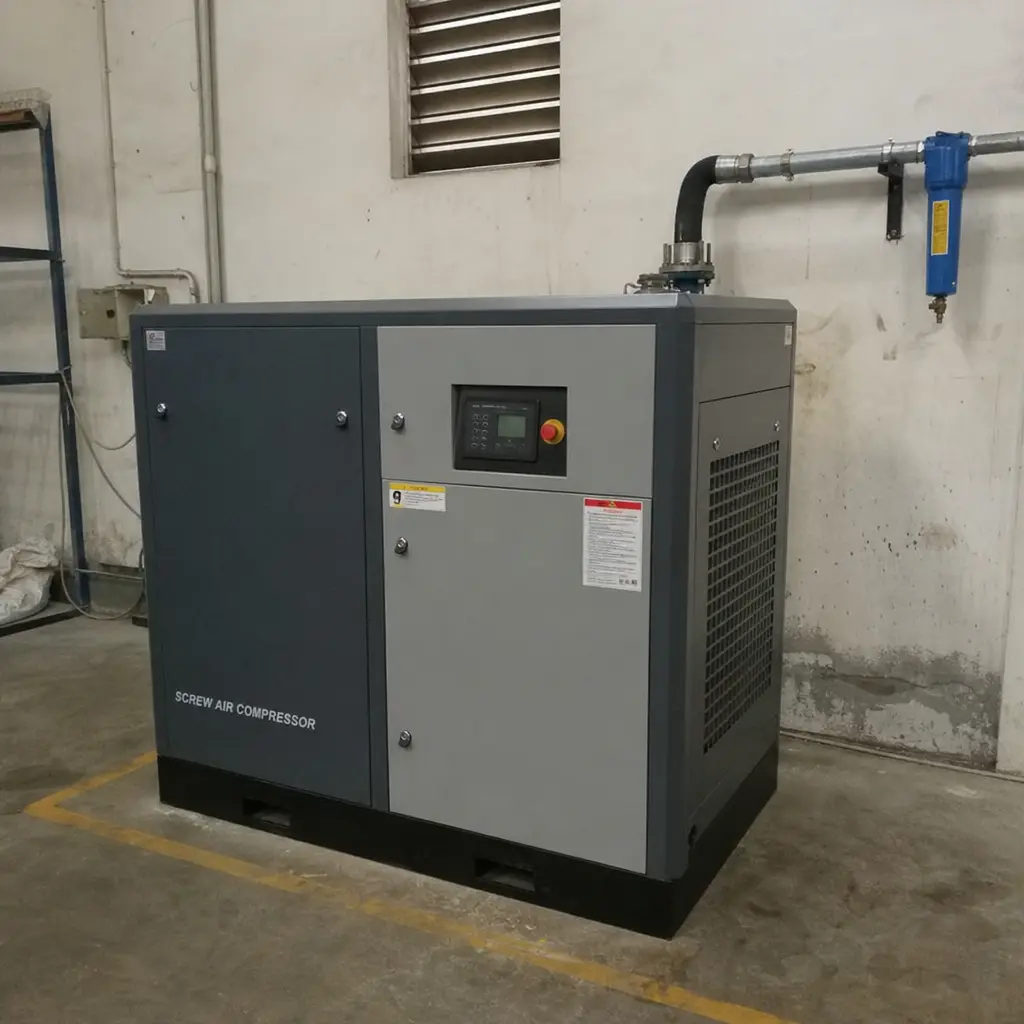
One of the strongest advantages of a rotary screw system is its ability to provide continuous compressed air. In many operations, air is not used once or twice an hour. It is used repeatedly, sometimes constantly, across multiple tools, stations, or machines.
A reciprocating compressor can be a good fit for light or intermittent use, but it may not be ideal when demand stays high. A screw compressor air system is designed for a more continuous duty cycle, which makes it a better match for operations that cannot afford long recovery periods or frequent pressure drops.
Common applications include:
The key benefit is not only volume. It is dependability. When a compressor rotary system is correctly selected for the workload, it can help the entire operation stay more predictable.
Energy use is one of the most important long-term considerations for any compressed air system. The purchase price of a compressor is only one part of the total cost. Over time, electricity often becomes a major factor, especially when the unit runs many hours per week.
Rotary screw compressors are commonly valued because they can operate efficiently under steady demand. Their design reduces some of the stop-start stress found in other systems, and many models are available with controls that help match output to usage. In facilities with changing air demand, variable speed options can be especially useful because they allow the compressor to adjust rather than run at full output all the time.
Efficiency still depends on proper sizing and system design. An oversized screw compressor may waste energy, while an undersized one may run too hard and still fail to meet demand. Air leaks, dirty filters, poor ventilation, and unnecessary pressure settings can also reduce performance. The compressor matters, but the entire compressed air system should be considered.
A practical energy checklist includes:
When these basics are handled well, a rotary screw air compressor can support both performance and operating discipline.
Compressed air equipment is often installed near people who are trying to work, communicate, inspect parts, or operate machinery. Noise is more than an annoyance in these environments. It can affect comfort, concentration, and the overall feel of a workspace.
Because a rotary air compressor uses a continuous rotary motion, it often runs more smoothly than piston-style equipment. Many units are enclosed with sound-reducing cabinets, which can make them easier to place closer to work areas. This does not mean every model is quiet, but the design is generally well suited for facilities where noise control matters.
Smooth operation can also reduce vibration-related concerns. Less vibration may help protect nearby equipment, reduce wear on certain components, and make installation more flexible. For shops with limited space, the ability to place a compressor in a practical location without excessive disruption can be a real advantage.
A screw type air compressor is reliable because its compression process is continuous, its rotor system is designed for long operating periods, and many units include cooling, lubrication, and control features that support stable performance. With routine maintenance, it can serve demanding environments where compressed air is a daily requirement.
Reliability starts with the compression mechanism. The rotors in a screw compressor are engineered to maintain close tolerances as air moves through the chamber. In oil-injected designs, oil helps seal, cool, and lubricate the compression process. In oil-free designs, the system is built to compress air without oil in the compression chamber, which may be important for applications with strict air quality requirements.
Maintenance is still essential. No compressor should be treated as “set it and forget it” equipment. Filters need attention, oil levels and quality must be monitored where applicable, belts or couplings may require inspection, and intake conditions should be kept clean. Good maintenance protects efficiency, air quality, and component life.
Typical care tasks may include:
The advantage is that maintenance can usually be planned. Instead of reacting to sudden performance problems, operators can create a predictable service routine that keeps the compressor ready for daily use.
Compressed air quality matters because the air often touches tools, parts, products, or process equipment. Moisture, oil carryover, and particles can create problems if the system is not designed for the application.
Rotary screw compressors can be paired with dryers, filters, drains, receivers, and other treatment equipment to improve air quality. The right setup depends on how the air will be used. A general repair shop may need a different level of treatment than a paint booth, packaging line, or sensitive production process.
The compressor itself is only the starting point. Air receivers help store compressed air and reduce demand swings. Refrigerated or desiccant dryers help manage moisture. Filtration can help remove particles and oil aerosols. Regulators and point-of-use filters can fine-tune air quality for specific tools or workstations.
This flexibility is valuable because it lets a business build a system around its real needs. Instead of assuming every user requires the same configuration, a rotary screw air compressor can be part of a broader setup that balances air quality, performance, and cost.
Many rotary screw compressors are built as compact, enclosed packages. That can be useful in facilities where floor space is limited or where equipment needs to be organized cleanly. Some systems combine the compressor, dryer, and receiver in a single package, reducing installation complexity for certain users.
Modern controls are another advantage. Depending on the model, a compressor may include digital monitoring, fault alerts, maintenance reminders, operating hour tracking, and performance settings. These controls make it easier for operators to understand what the machine is doing and when service may be needed.
For managers, this visibility can support better planning. Instead of waiting until pressure problems appear, the team can monitor trends, schedule maintenance, and respond to warnings earlier. That can help protect productivity, especially in facilities where compressed air is tied directly to revenue-producing work.
A rotary screw compressor is the right fit when an operation needs frequent or continuous compressed air, stable pressure, and equipment designed for long run times. It may be more compressor than a small hobby user needs, but it is often well suited for commercial, industrial, and high-demand shop environments.
Before choosing any compressor, it helps to look closely at the actual use case. The best option is not always the largest unit or the most advanced model. It is the system that matches air demand, air quality requirements, duty cycle, available space, and maintenance capabilities.
Consider these decision points:
Thinking through these questions helps prevent two common mistakes: buying too little compressor and struggling with performance, or buying too much compressor and wasting energy.
The main advantages of a rotary screw air compressor come from its combination of continuous airflow, efficient operation, smoother performance, flexible air treatment options, and long-term reliability. For businesses that rely on compressed air every day, those benefits can translate into fewer interruptions and a more stable workflow.
The best results come from choosing the right size, installing the system correctly, and maintaining it consistently. A screw compressor is not just a machine in the corner; it is part of the infrastructure that keeps tools, people, and processes moving.
If your operation depends on compressed air for daily production, maintenance, finishing, or automation, a rotary screw system is worth serious consideration. With the right configuration, it can provide the steady performance needed to keep work moving without making compressed air the weak link in the process.

Behind Every Critical Project.
@ 2026-2026 Rigtor Industry. All Rights Reserved.
 EN
 ES
 PT
 AR